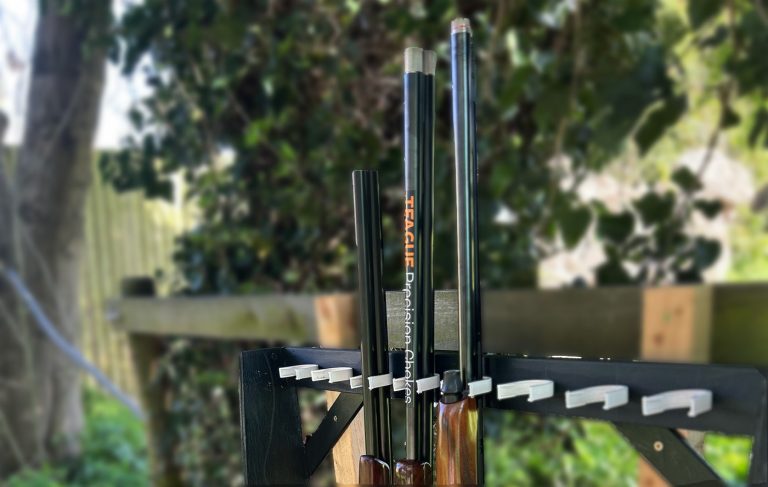
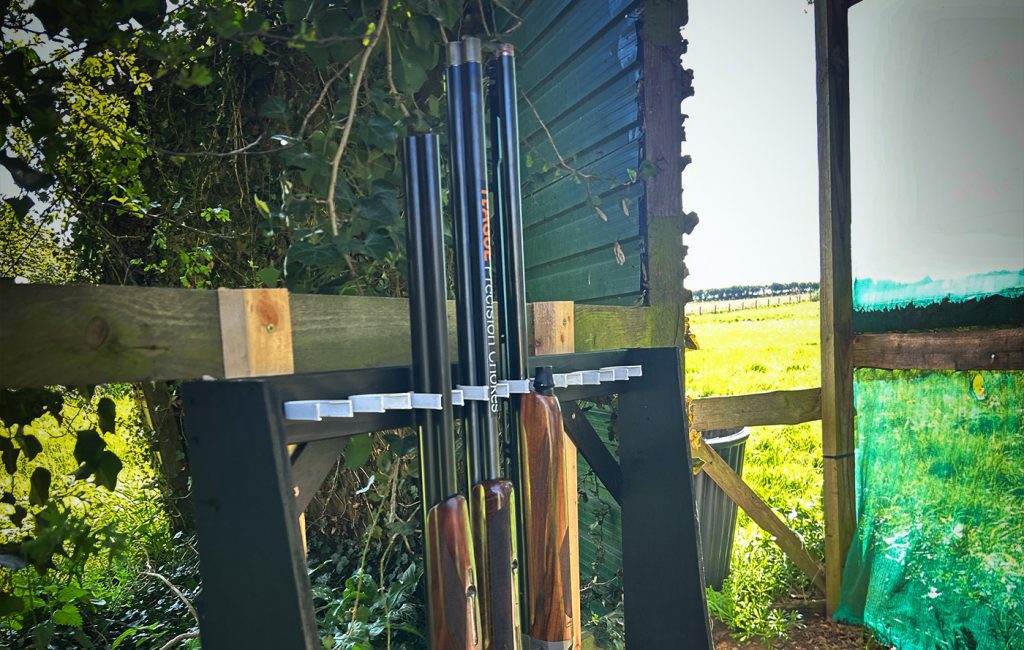
A magical constriction or an annoying distraction?
Chokes are the one topic that can split a squad into two distinct groups – Twiddlers & Non-Twiddlers.
We’ve seen some shooters with a vast array of chokes lined up in a box like Picasso’s pencils. And very much like old Pablo, they pore over the selection of in front of them, meticulously considering the best tool for the job in-hand.
On the flip side are the shooters who simply ‘fit & forget‘ – they screw in their faves and get busy shooting all year.
But who’s right?
Does choke twiddling stand-by-stand actually give you a competitive advantage?
Or is it just adding in a distraction when the focus should be sizing up the targets being thrown?
First things first
Let’s nail the physics of a choke quickly.
In simple terms, a choke is nothing more than a slight restriction in the final few inches of the barrel. Its sole purpose is to control how soon the shot column leaving the cartridge through the end of the barrels turns into a shot cloud and ultimately spreads out mid-air.
As the pellets travel through this final section a tighter choke keeps them together for longer. That means they travel further before starting to spread out into the final shot cloud.
A wider choke allows the pellets to begin to spread much sooner, so the shot cloud forms much nearer.
So for a long-range shot, a tighter choke (or ‘choking up‘) is the option. For a close target a wider choke is better.
If you want to dive deeper into choke choices have a look at our article Chokes. What’s the difference?
Anyway, back to the plot.
Is the twiddle worth the fiddle?
Here comes the dilemma.
If you’re shooting a long range target then ‘choking up‘ to Full looks like a serious advantage.
But that close-range pesky rabbit isn’t going to get away from a monster shot cloud thrown at it from a Cylinder or Skeet choke.
Putting it into the golfing arena for a second, you wouldn’t grab your pitching wedge to belt a 300 yard tee shot would you? So you definitely wouldn’t screw in a Skeet choke to despatch a 70 yard battue.
But…
You could go around a golf course with a 9 iron. It’ll pretty much do the job on all your shots if you have the right swing, aim and power to suit – or at least, some would argue that way.
Much the same can be said for putting a 1/2 choke in the top and bottom barrel and getting on with the the job in hand.
So what’s the right answer?
“It's a personal thing that can be argued all ways”
It depends...
As with shooting the different clay targets, we all approach things with our own marginal preferences. Therefore the very same logic should be applied for swapping out chokes.
If you’ve never tried it, bone up on what to use and when, go and shoot a few rounds and see if you gather a few more PAIR DEADs on your card.
If you see no difference or your scores actually take a hit, then adopt the ‘fit & forget‘ approach.
Our suggestion if you do go for ‘fit & forget‘ is a pair of 1/2 chokes top and bottom or maybe a pair of Improved Cylinders.
They’re both good middle ground – the 9 irons of clay shooting.
My personal view
We’ve been talking about chokes, the difference they make to reach and pattern but there’s something else that can do a similar job – cartridges.
I’m from the ‘fit & forget‘ camp but I also realise that close vs. long range targets need treating differently if I’m going to give myself an edge.
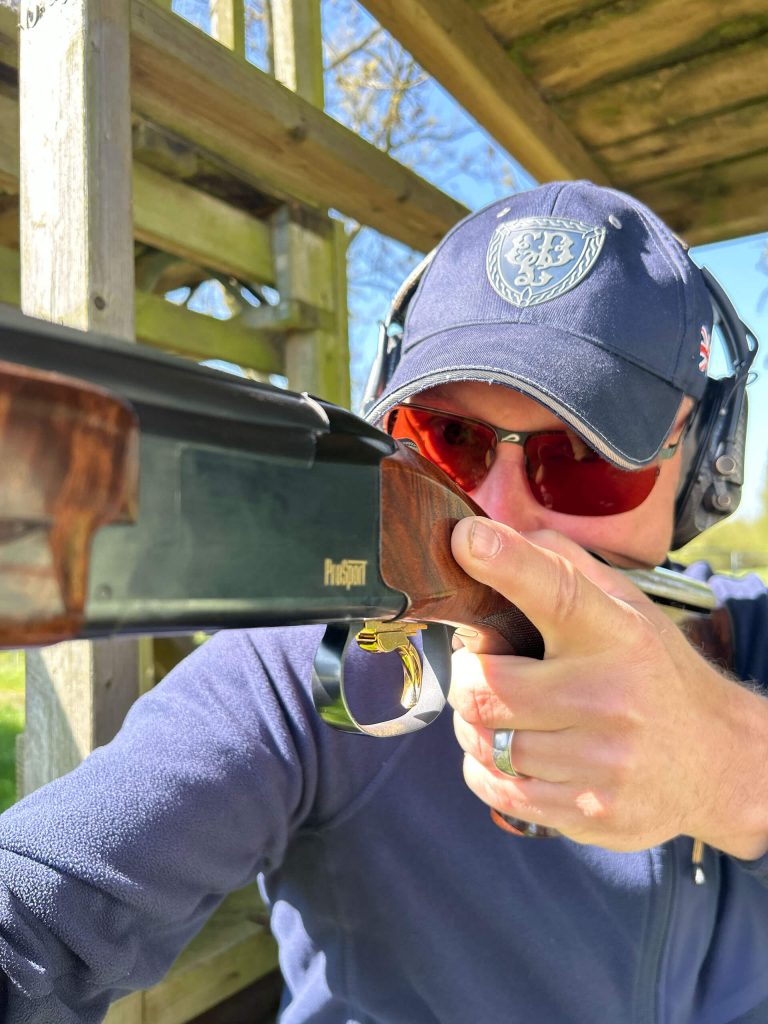
I have my Browning ProSport choked 1/2 & 1/2 but then I carry a selection of different shells for despatching a variety of targets.
My go-to shot size for targets in the middle ground (30 yards to 50 yards) is always a 7.5 or a 7. Nice spread, good reach and very reliable all round.
But if a close range rabbit, a blaze away or incoming crow are all on the board at -30 yards, I reach for my 9’s. They give me that faster spread for a larger shot cloud sooner in flight than the 7.5’s would give.
And if I wander up to a stand and see a Full Use on offer, a +60 yard battue or raging edge-on crosser in the distance, the 6.5’s come out to play – giving me more reach and punch when they connect.
By switching the shells around I’m effectively using similar physics to the chokes, I’m just doing it without the twiddle.
I have always been told “there’s no right or wrong way to shoot a target. If it breaks, keep doing it“.
So have a go with all of these methods and find your ideal approach because what works for one, doesn’t work for all.
And that’s the joy of clay shooting.