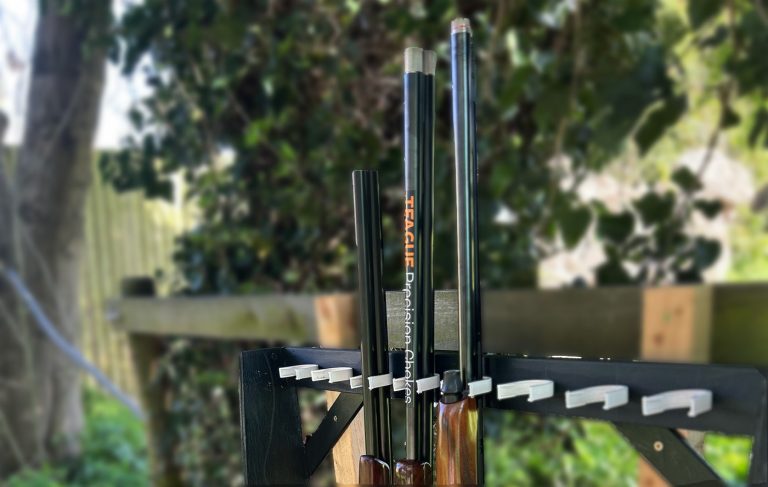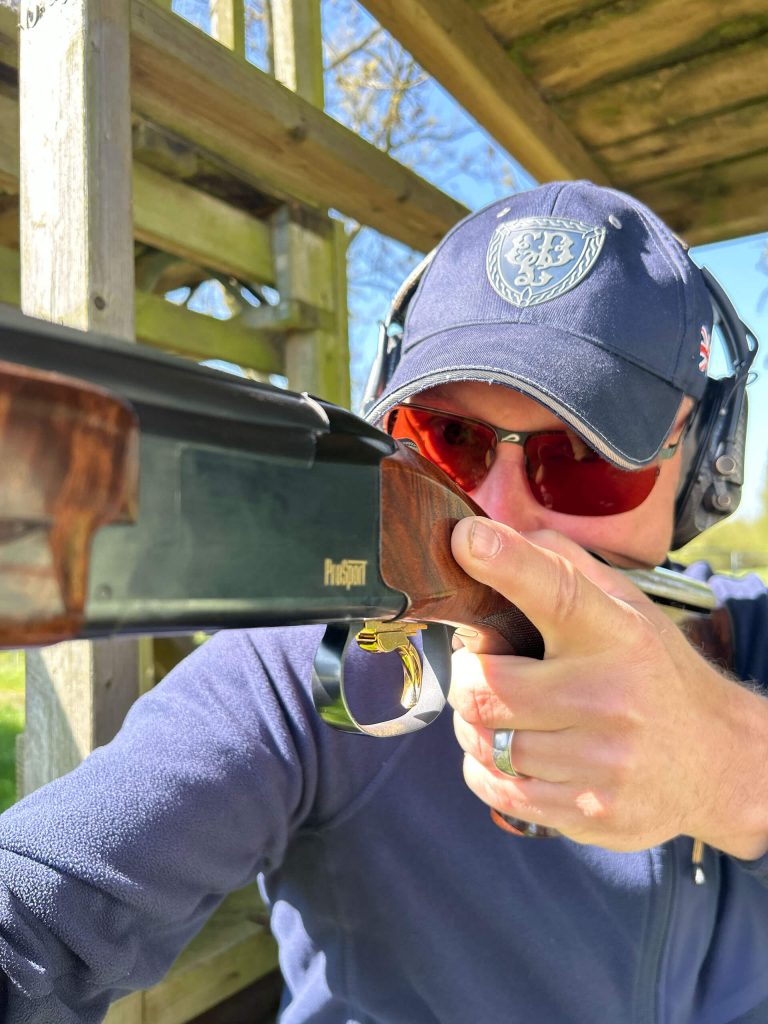
First up, do you even need to switch your chokes around?
We’ve explored this topic in our article Chokes. Twiddle or not? and it really is a personal preference. It’s a debate that will rage on forever keeping the Clubhouse banter flowing strong.
But if you’re perplexed by these weird tubes called chokes and curious as to when to give them a twiddle in and out, this one’s for you.
Cylinder and Improved Cylinder (Skeet)
These profiles offer the minimum restrictions required to let the shot cloud turn up quickly.
They’re engineered for close-quarter work where the target is near, maybe moving fast and requires a wide net to catch it. They also come in very handy for nearby floaty targets where you’ve got to grip that forend with all your might and tell yourself to keep the barrels still for an accurately timed spot shot.
Try stretching these to a distant edge-on battue though and you’re in for trouble.
But for a naughty rabbit hopping away from you at 20 yards on full spring, these chokes will definitely impress when that target is smoked.
Modified and Improved Modified (half and three-quarter)
This is the pragmatic middle ground where most performance-focused shooters find their rhythm.
They are akin to the 7 iron in golf – a proper all rounder.
They retain enough core density to the shot exit to dust a distant crosser while offering just enough breathability to forgive a slight error in lead on a closer teal.
For many of us at PAIR DEAD, a pair of half chokes is the ‘fit & forget’ configuration that eliminates the need for twiddling entirely.
But that’s a debate for another day…
Full Choke
The long range master blaster. Fact.
It you’ve got a +60 yard target sticking two fingers up to you as it sails past, twiddle in these badasses and send the shot to the target. You’ll reach it easily and dust it like it’s a 20 yard rabbit being hit with 9 shot size through a skeet choke. Dust!
Don’t forget to swap this sniper choke out though because if you’re tackling a nearby target next, you’re going to suffer. Unless you like trying to hit clays with shot cloud the width of a marker pen of course.
The TL;DR version
With so much choice, even beyond the ones listed above, there’s a bit of agreement behind what chokes you use and when – but that ends here.
Our handy table below shows each of the common chokes and when they come into their own.
You’re welcome.
| Choke Type | Constriction | Best used for... | And what it does |
|---|---|---|---|
| Cylinder | None | Close-range rabbits, skeet station 8 | Lets the shot spread fast. Close quarters, no bother. |
| Skeet | Very light | Skeet, close woodland targets | A tiny bit tighter than cylinder. Perfect for fast, close birds. |
| Imp. cylinder | Light | General sporting, 20-30 yards | The all-rounder. Good spread, decent reach. |
| Modified (1/2) | Medium | Long-range crossers, trap | Keeps the pattern dense out to 40 yards. Serious business. |
| Full | Heavy | High birds, long-distance trap | A tight 'laser beam' of shot. If you miss, you miss big. |