The secret shield: Why your cap is more than a fashion statement
We’ve all been there, haven’t we? Standing on the layout, eyes peeled for that crossing midi, only for a piece of some poor soul’s obliterated clay to come whistling down like a piece of space debris. Just last week, one of us managed to miss a sitter of a teal (don’t ask, her lead was somewhere in the next county), and while she was busy cursing her own reflection in the clubhouse window, a jagged shard of black clay clipped the peak of her cap.
If she hadn’t been wearing the headgear? Well, let’s just say her forehead would’ve looked like she’d gone three rounds with a very angry badger. It got us thinking: we always pay attention to ear defenders and fancy glasses, but the humble shooting cap is the unsung hero of the ground. It’s not just for looking the part in the post-shoot photos; it’s actually the shooters’ first line of defence.
The "INCOMING!" buffer
Think of your cap as a secondary bit of PPE. When we’re out on a busy ground, things are flying everywhere – not just the clays. Whether it’s a bit of falling debris from a shattered target or the person on the next stand whose semi-auto decided to eject a hot shell directly toward your face, that peak provides a crucial layer of protection for your eyes and forehead.
Combined with safety glasses, a cap completes the shield for (arguably) the most important part of your body – your head. It’s much better to have a bit of clay bounce off your brim than off your eyebrow. Trust us, we’ve seen the bruises and they aren’t pretty.
The fact: A falling shard can travel pretty quickly and will almost certainly have jagged edges. It’s moving fast and is sharp enough to cause a serious laceration.
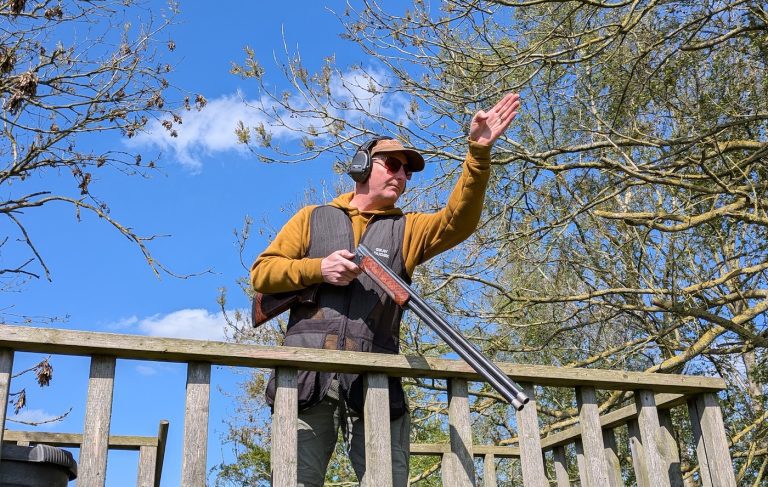
The deflector: The stiff peak of a shooting cap acts like a lightweight hard hat. It’s designed to intercept descending debris and kick it away from our eyes and cheeks. If you’ve ever heard that tink-tink sound on your brim, you know exactly what we mean. It’s a shield, plain and simple.
The ultimate sun shield
The most obvious benefit of a shooting cap is, of course, the peak. There’s nothing more frustrating than being halfway through a cracking round, only for the sun to peep out from behind a cloud and turn the sky into a giant white void. A good cap acts like a blinker, cutting out that overhead glare and allowing us to focus entirely on the line of the bird.
We’ve all had those moments where we’ve completely lost a target in the light, swung blindly and hoped for the best – usually resulting in nothing but a puff of air and a loss on the scorecard. A cap won’t fix a bad lead, but it’ll at least make sure you can see what you’re missing.
Contrast, not just shade
It’s not just about keeping the sun out of our eyes so we don’t squint like we’re looking into a supernova. It’s about target acquisition.
The science: By cutting out overhead light, a cap allows our pupils to dilate slightly more than they would in open glare. This increases our perception of contrast. It makes that orange dome pop against a grey sky or a dark treeline. Better contrast means a faster mount and a cleaner break.
Keeping the focus high (and the rain out)
Let’s talk about the psychological side of the cap. When you pull that peak down, it’s like a Do Not Disturb signal for your brain. It narrows your peripheral vision, cutting out the distractions of the crowd behind you or the movement of the bushes in the wind. It’s just you and the clay.
And let’s be real: chances are you’re at a British shooting ground. If it isn’t sunny, it’s raining. A cap keeps the water off your glasses, which is the difference between seeing a clear target and trying to shoot through a foggy windshield. There’s nothing that typifies a British shooters’ life than standing in a downpour, water dripping off our peaks, convinced that this is the set where we’ll finally hit 25 straight.
So, whether yours is a salt-stained relic from ten years ago or a fresh lid you’ve acquired recently, keep it on. It’ll keep you focused & safe, and most importantly it covers up the “hat hair” we all get after three hours on the stands.